What Are the Best Mild Steel Table Bases for Heavy-duty Commercial Use?
Best mild steel table bases for heavy-duty commercial use? Discover VVITAL product ranges, ideal for restaurants, bistros, cafes, hotels. Wobble-free stability.
What are the best mild steel table bases for heavy-duty commercial use?
Introduction: Why Your Table Foundation Matters More Than You Think
A commercial dining table is only as reliable as the base that supports it. Without a properly engineered foundation, even the most beautiful solid wood or stone slab will wobble, sag, or fail under the stress of daily restaurant operations. For business owners, contractors, and hospitality designers, selecting the right table base isn't just about aesthetics—it's about safety, durability, and long-term value.
Mild steel (low-carbon steel) has emerged as one of the most practical and cost-effective materials for heavy-duty commercial table bases. It offers exceptional strength-to-cost ratio, excellent weldability, and proven structural reliability for high-traffic environments when properly finished. But with dozens of options on the market, how do you identify the best mild steel table bases for your commercial application?
This comprehensive guide breaks down everything you need to know—from material comparisons and performance standards to specific product recommendations from industry-leading manufacturers like VVITAL.
1. Mild Steel vs. Stainless Steel—Which Material Wins for Commercial Use?
Before diving into specific products, it's essential to understand where mild steel stands against its premium counterpart, stainless steel. Both materials have legitimate places in commercial furniture, but they serve different needs and budgets.
| Feature | ✅ Mild Steel | ✅ Stainless Steel |
|---|---|---|
| Initial Cost | Lower—significantly more budget-friendly | 3 to 5 times more expensive than mild steel equivalents |
| Load-Bearing Capacity | Excellent—ideal for heavy frameworks and base structures | Superior—some grades deliver significantly higher tensile strength |
| Corrosion Resistance | Requires protective coating (powder coating or galvanization) | Naturally rust-resistant with self-healing oxide layer |
| Maintenance | Higher—coated surfaces require inspection and possible repainting | Low—simple cleaning maintains appearance for decades |
| Weldability | Very easy to weld with no special procedures required | Requires controlled welding process and specialized equipment |
| 20-Year Lifecycle Cost | Often higher due to maintenance and potential replacement | Often lower despite higher initial investment |
| Ideal Applications | Indoor dry environments (restaurants, offices, cafes), structural frameworks | Outdoor, marine, humid environments, and premium hospitality spaces |
The Bottom Line on Material Selection
Choose mild steel when: Budget is a primary concern, your installation is indoors or in dry environments, and you need excellent weldability and structural strength without paying a premium.
Choose stainless steel when: The installation will face moisture or outdoor exposure, long-term low maintenance is essential, or the aesthetic demands a clean metallic finish that won't require recoating.
2. Key Specifications for Heavy-Duty Commercial Mild Steel Table Bases
Not all mild steel table bases are created equal. When evaluating products for commercial use, pay close attention to these critical specifications:
2.1 Material Thickness & Structural Integrity
The thickness of the steel directly correlates with load capacity and stability. For heavy-duty commercial applications, look for:
- Steel tubing wall thickness: Minimum 1.5mm for light commercial; 2mm to 3mm for heavy-duty applications
- Base plate thickness: 6mm to 8mm steel plate provides superior stability and weight distribution
- Reinforced welds: Laser-cut precision forming and reinforced welding points prevent structural failure under load
The VVITAL VT-B-004 series, for example, features 8mm thick steel construction with laser-cut precision welding, engineered specifically for outdoor and heavy-duty commercial applications. This level of material thickness ensures the base can support substantial weight without deformation over years of daily use.
2.2 Weight Capacity
Commercial table bases should clearly specify their load-bearing capacity. Industry standards indicate:
- Light commercial (cafes, casual dining): 250–400 kg (550–880 lbs)
- Medium commercial (restaurants, hotels): 400–700 kg (880–1,540 lbs)
- Heavy commercial (conference tables, bar tops, stone tabletops): 700–1,000+ kg (1,540–2,200+ lbs)
14-gauge steel frames have been independently tested to support up to 1,000 lbs of static load. Always verify that the combined weight of your tabletop, anticipated seating load, and daily use remains within manufacturer safety margins.
2.3 Surface Treatment & Coating Quality
Since mild steel is vulnerable to rust and corrosion, the quality of surface treatment is paramount. The industry standard for commercial furniture is electrostatic powder coating, which provides a hard, scratch-resistant protective layer. VVITAL products feature sand black powder coating as standard across their mild steel base line, with optional custom finishes available for bulk orders. For outdoor commercial applications, powder coating must meet higher thresholds—typically 1,000+ hours of salt spray resistance.
3. Top Mild Steel Table Base Designs for Commercial Applications
Different commercial spaces require different base configurations. Here are the most popular and effective designs for heavy-duty use.
3.1 Square & Rectangular Tube Bases
Square steel tube bases offer a clean, contemporary aesthetic combined with exceptional structural rigidity. Best for: Restaurants, cafes, conference rooms, and any setting where a minimalist industrial look complements the décor.
3.2 Pedestal (Single Column) Bases
Pedestal bases are the gold standard for maximizing legroom. Best for: Restaurants and bars where customer comfort and efficient floor plan utilization are priorities.
3.3 U-Shaped & Modular Bases
U-shaped designs provide two-point support, excellent for longer tables. Best for: Long communal tables, conference tables, and heavy stone countertops.
3.4 Twin-Tube Bases
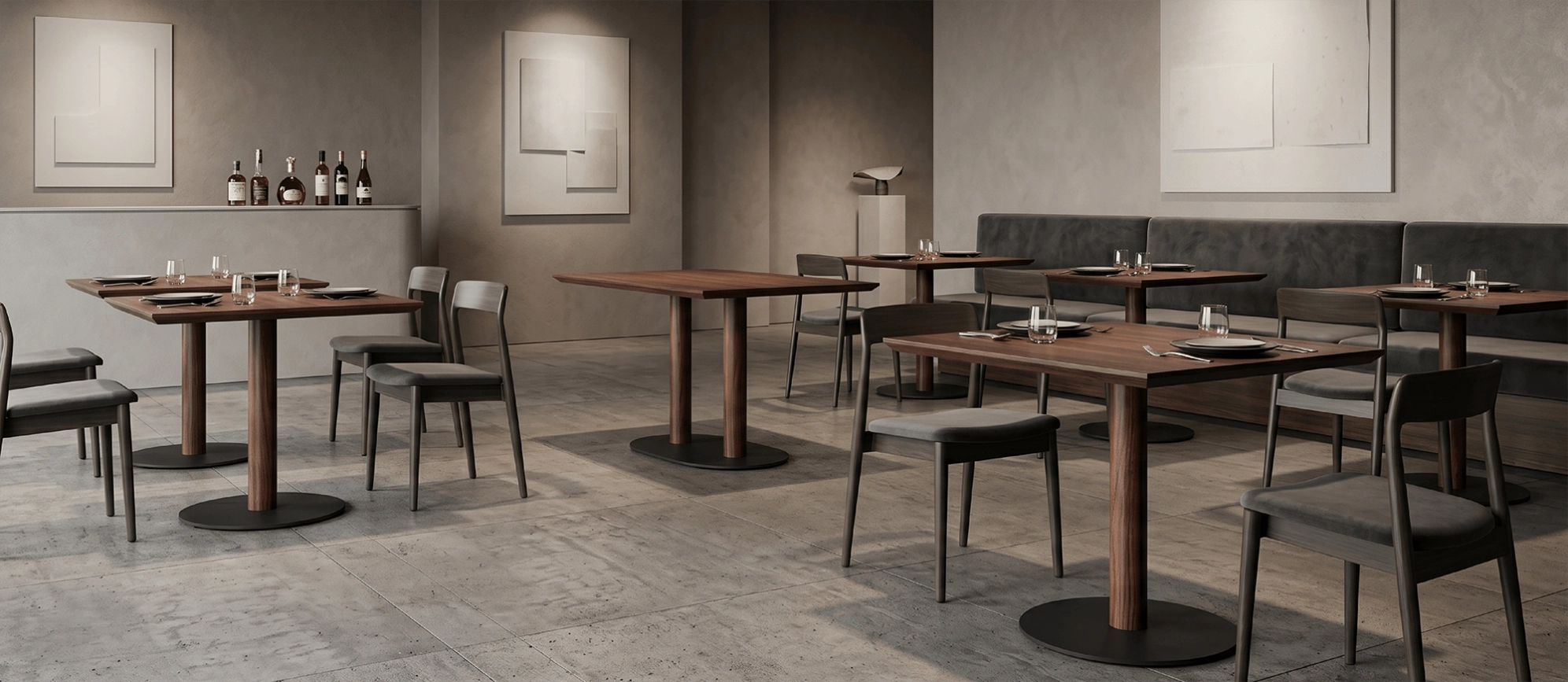
Twin-tube designs offer outstanding stability for heavy tabletops. VVITAL's twin-tube rectangle dining table base (VT-B-006 series) exemplifies this design, crafted from high-quality heavy-gauge metal to ensure exceptional stability and durability.
4. VVITAL—Engineered for Commercial Excellence
When evaluating mild steel table bases for your commercial project, brand reputation and manufacturing capabilities matter as much as product specifications. VVITAL Furniture Co., Ltd. has established itself as a trusted supplier of metal restaurant table bases with more than a decade of manufacturing experience. Based in Foshan, China, VVITAL brings over 17 years of OEM/ODM expertise, producing cast iron, mild steel, stainless steel, aluminum table bases, plus HPL tabletops.
VVITAL's integrated manufacturing ecosystem includes advanced CNC routers and precision welding equipment, enabling tight tolerances (±0.5mm) and consistent batch quality. The company's facility scale (exceeding 3,000 m² with monthly output capacity of over 10,000 units) ensures reliable lead times for both small and large commercial orders.
Key VVITAL Mild Steel Table Base Products for Commercial Use
Laser-cut steel construction with reinforced welds and sleek minimalist profile. Engineered to support large tabletops with wobble-free stability; works seamlessly with wood, stone, or tempered glass.
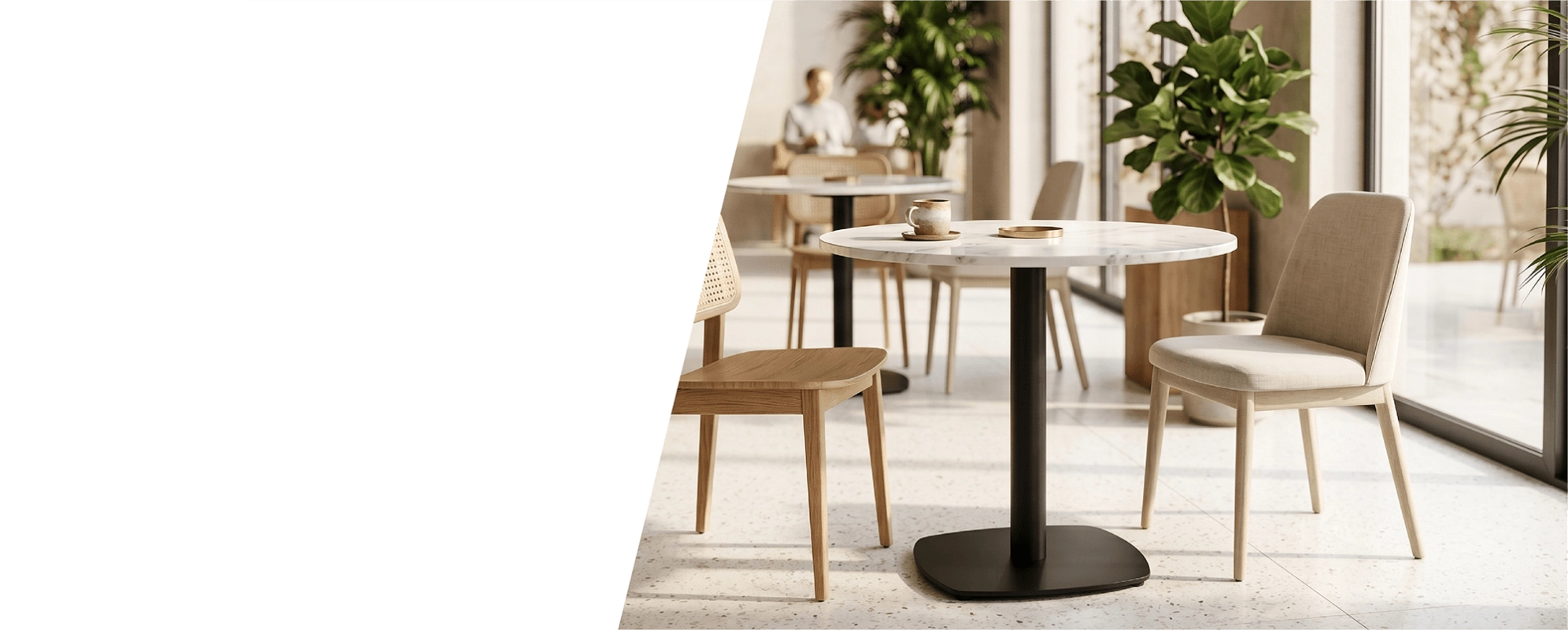
Architectural-grade square tube construction (80×80 mm tubing) on an 8mm thick steel base plate. Heavy-duty outdoor and indoor commercial applications. Sand black powder coating offers superior corrosion protection.
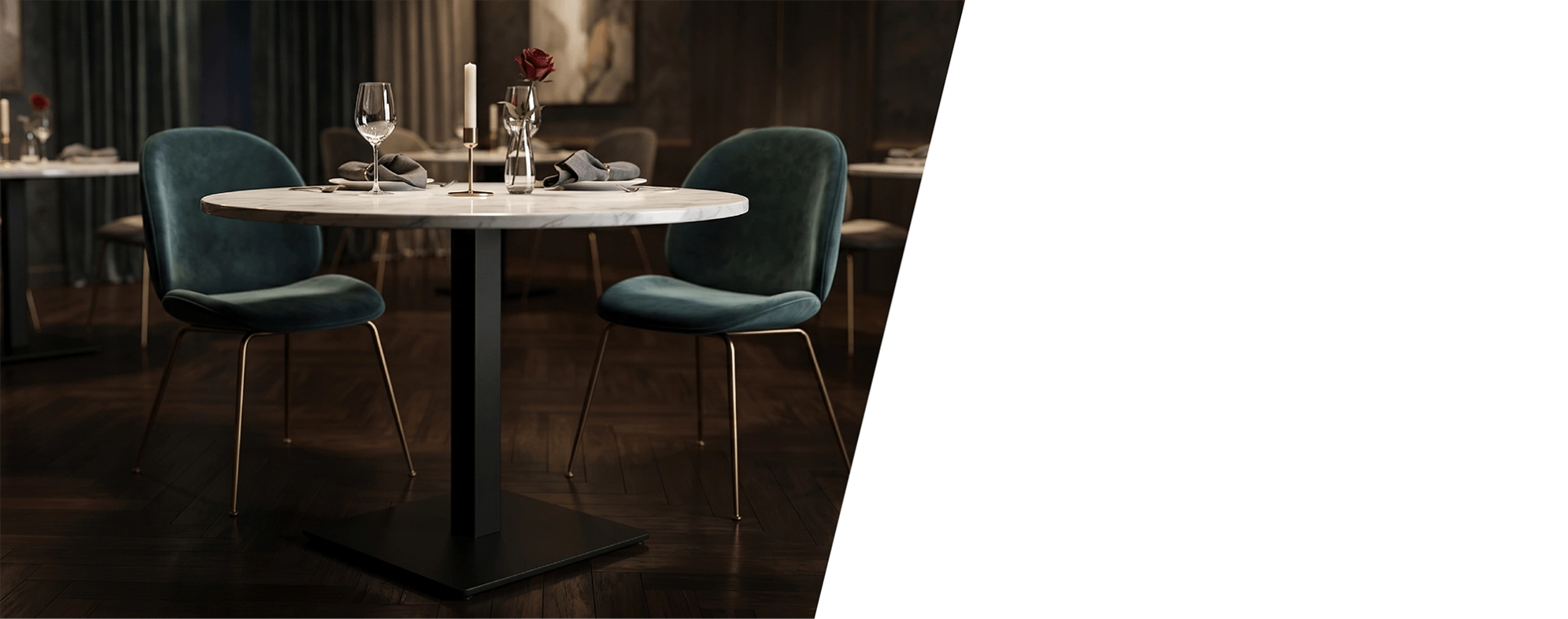
Single-column pedestal design with Φ219 mm tubing and 600×600 mm top plate. Great for residential and light commercial use, patios, casual dining areas.
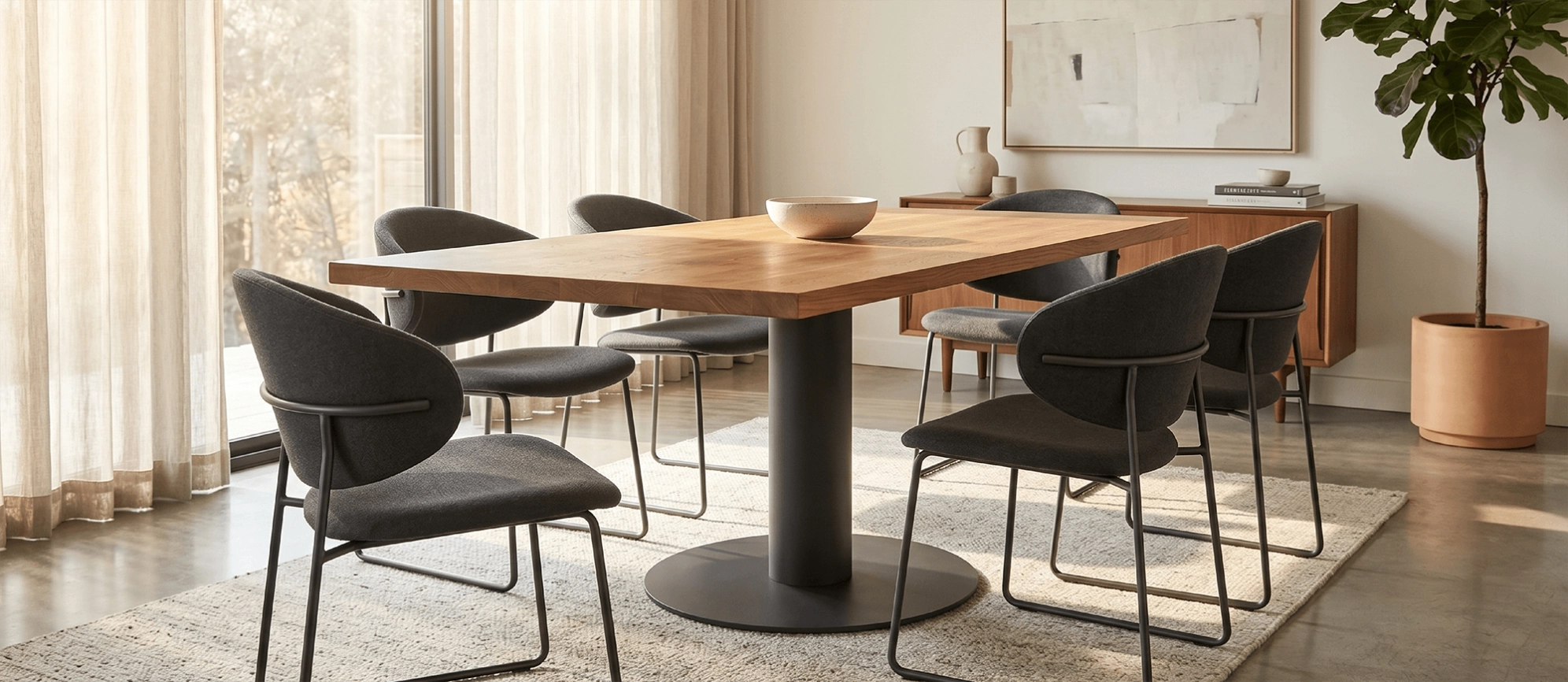
Innovative wood-grain steel tubing with realistic wood texture printed on heavy-gauge powder-coated steel. 30% lighter than cast iron with comparable strength; ideal for outdoor commercial settings wanting wood aesthetics without maintenance.
Why Choose VVITAL for Commercial Projects?
- Manufacturing Depth: 17+ years of OEM/ODM experience with 100+ pre-engineered designs.
- Quality Control: Environmental compliance certifications and outstanding quality control systems.
- Cost Efficiency: Factory-direct pricing typically undercuts Western alternatives by 20–35%.
- Responsiveness: Dedicated sales teams provide quotes within 24 hours.
- Product Breadth: From cast iron bistro bases to wood-finish steel designs, VVITAL covers all categories.
5. Comprehensive Buying Guide for Commercial Mild Steel Table Bases
5.1 Tabletop Compatibility
| Tabletop Material | Weight (approx.) | Base Considerations |
|---|---|---|
| Solid wood (butcher block) | Heavy | Requires strong lateral stability; H-frame or twin-tube designs recommended |
| Engineered wood/laminate | Medium | Compatible with most base designs; mounting plates must align |
| Natural stone (granite, marble) | Very heavy | Maximum load capacity (800+ kg); wide base footprint essential |
| Tempered glass | Medium-heavy | Felt/rubber padding between top and base; ensure pre-drilled holes |
| HPL (high-pressure laminate) | Light to medium | Compatible with all base types; ideal for cost-conscious projects |
5.2 Height Requirements
Standard commercial dining table height: 720 mm. Bar height: 1080 mm; counter height: 900–950 mm; coffee table: 400–450 mm.
5.3 Installation Considerations
Pre-drilled mounting plates reduce installation time; adjustable leveling feet are essential for uneven floors; floor protection pads prevent damage. For large tables using multiple bases, ensure combined load distribution stays within building floor load limits.
6. Conclusion
Selecting the best mild steel table bases for heavy-duty commercial use requires balancing material properties, design specifications, and manufacturing quality against your specific application requirements and budget. For most indoor commercial applications, a properly coated mild steel table base from a reputable manufacturer delivers outstanding value. The key differentiators are steel thickness, weld quality, and coating quality.
For projects demanding the best combination of structural integrity, design variety, and manufacturing expertise, VVITAL stands out as a proven partner. With over 17 years of experience, comprehensive product range, and factory-direct pricing that offers significant savings compared to Western alternatives, VVITAL provides commercial buyers with the quality assurance and value necessary for successful furniture projects.
For outdoor or high-moisture environments, consider stainless steel or specialized outdoor-rated powder-coated mild steel. While the upfront investment is higher, the reduced maintenance and extended service life often justify the premium.