Table Base Care Guide: Cast Iron, Steel, Stainless & Aluminium
Learn how to care for cast iron, steel, stainless steel, and aluminium table bases. Rust prevention, cleaning tips, and maintenance advice for long-lasting furniture.
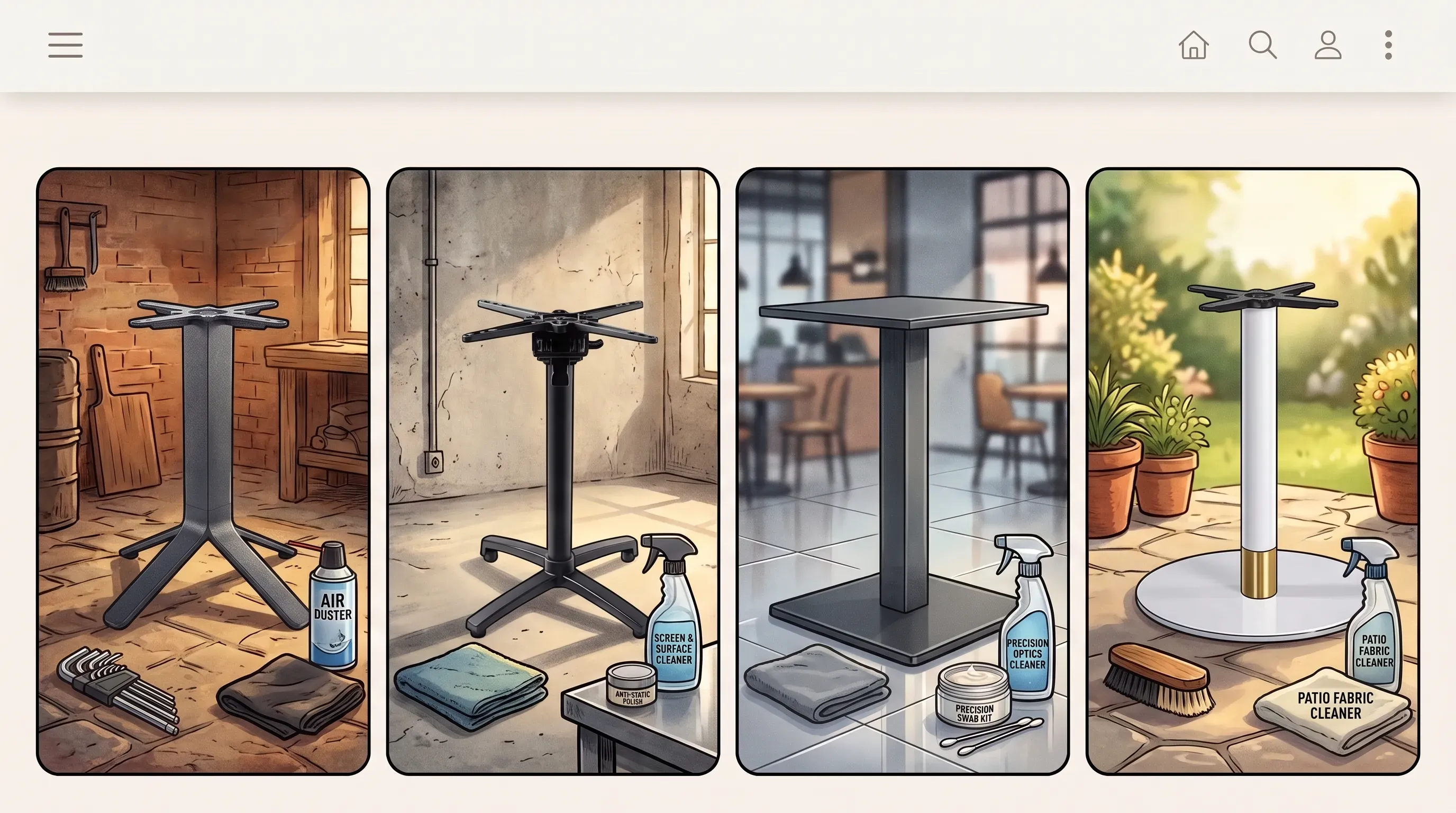
Table base care: cast iron, steel, stainless & aluminium
Different metal table bases demand different care. The core principles are rust prevention, corrosion control, and avoiding physical damage. Below you’ll find a practical guide for each material — clear, concise, and ready to apply.
Cast iron table base
Key trait: Heavy and sturdy, but the least rust‑resistant among the four.
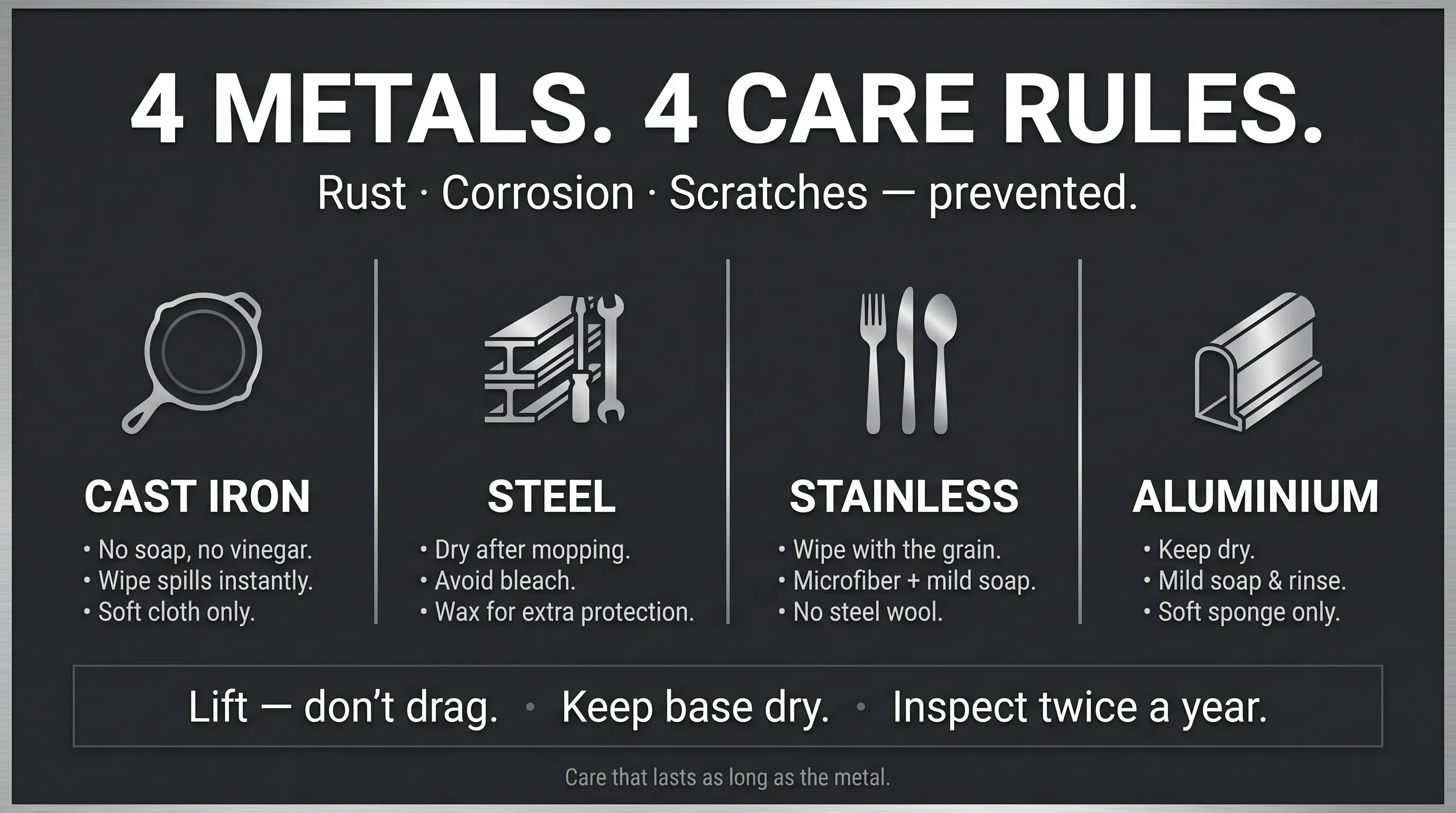
- Rust is priority #1: Acids and alkalis aggressively corrode cast iron. Never use soap, vinegar, or baking soda for cleaning. If any spill occurs, wipe it off immediately.
- Gentle cleaning: Use a soft cotton cloth for daily dusting. For grooves, a soft brush works best — avoid abrasive tools that could damage the protective coating.
- Handle with care: Prevent bumps and excessive shaking during moving or use; impacts can chip the surface.
Steel table base
Key trait: Usually coated (paint, powder, or lacquer). Rust resistance depends largely on that coating.
- Wipe after mopping: Moisture is the main enemy. If water splashes onto steel table base after floor cleaning, dry them immediately with a cloth.
- Avoid corrosive cleaners: Keep bleach (e.g. chlorine-based) and abrasive detergents away from the surface.
- Occasional protection: After cleaning and drying, you can apply a thin coat of car wax or sewing machine oil — it creates a protective barrier against moisture.
Stainless steel table base
Key trait: Excellent rust and corrosion resistance, but prone to water spots, fingerprints, and scratches.
- Wipe along the grain: Stainless often has a brushed finish. Always wipe in the direction of the grain; wiping across can make the surface look dull or blurry.
- Clean & protect: A damp microfiber cloth works for daily cleaning — dry it afterward to avoid water marks. Use mild dish soap for tougher spots. Never use steel wool.
- Minor scratches: Apply a drop of cooking oil and rub gently with the grain to reduce visibility.
- Check fasteners: Periodically inspect screws and joints for tightness.
Aluminium table base
Key trait: Lightweight and often coated (paint or anodised). Maintenance is relatively simple.
- Keep dry: Although aluminium doesn’t rust, prolonged moisture can cause oxidation or pitting.
- Use a clean cloth: Dirt particles trapped in a dirty rag can scratch the surface or damage the finish.
- Powder‑coated surfaces: For outdoor aluminium furniture, clean with warm water + mild soap and a soft sponge, then rinse thoroughly with clean water.
General tips for all metals
- Lift, don’t drag: Always lift the table when moving it to avoid scratching floors and stressing joints.
- Keep the base dry: Moisture trapped between the base and the floor accelerates corrosion — use felt pads or coasters if needed.
- Inspect regularly: A quick visual check every few months helps catch loose screws or coating damage early.