Marble or Terrazzo Tabletop Storage: Vertical or Horizontal? The Right Way to Protect Your Investment
Industry standards for marble and terrazzo tabletop storage. Learn why vertical storage is recommended and how to prevent costly breakage. Essential guide for specifiers and retailers.
Marble or Terrazzo Tabletop Storage: Vertical or Horizontal? The Right Way to Protect Your Investment
Why Storage Orientation Matters
Marble and terrazzo are celebrated for their beauty and compressive strength. But both materials are brittle, with relatively low flexural strength. They resist compression well but perform poorly under tension or bending stress.
- Vertical storage distributes the panel's weight evenly along its longest edge, minimising internal stress.
- Horizontal storage, especially when stacking multiple units, concentrates weight on the lower slabs. Over time—or with a single accidental bump—this can lead to micro-cracks, warping, or outright breakage.
For commercial end-users like restaurant owners, a cracked tabletop means delayed openings, unhappy guests, and unexpected replacement costs. For designers and retailers, it means strained client relationships and eroded trust.
Vertical Storage: The Professional Standard
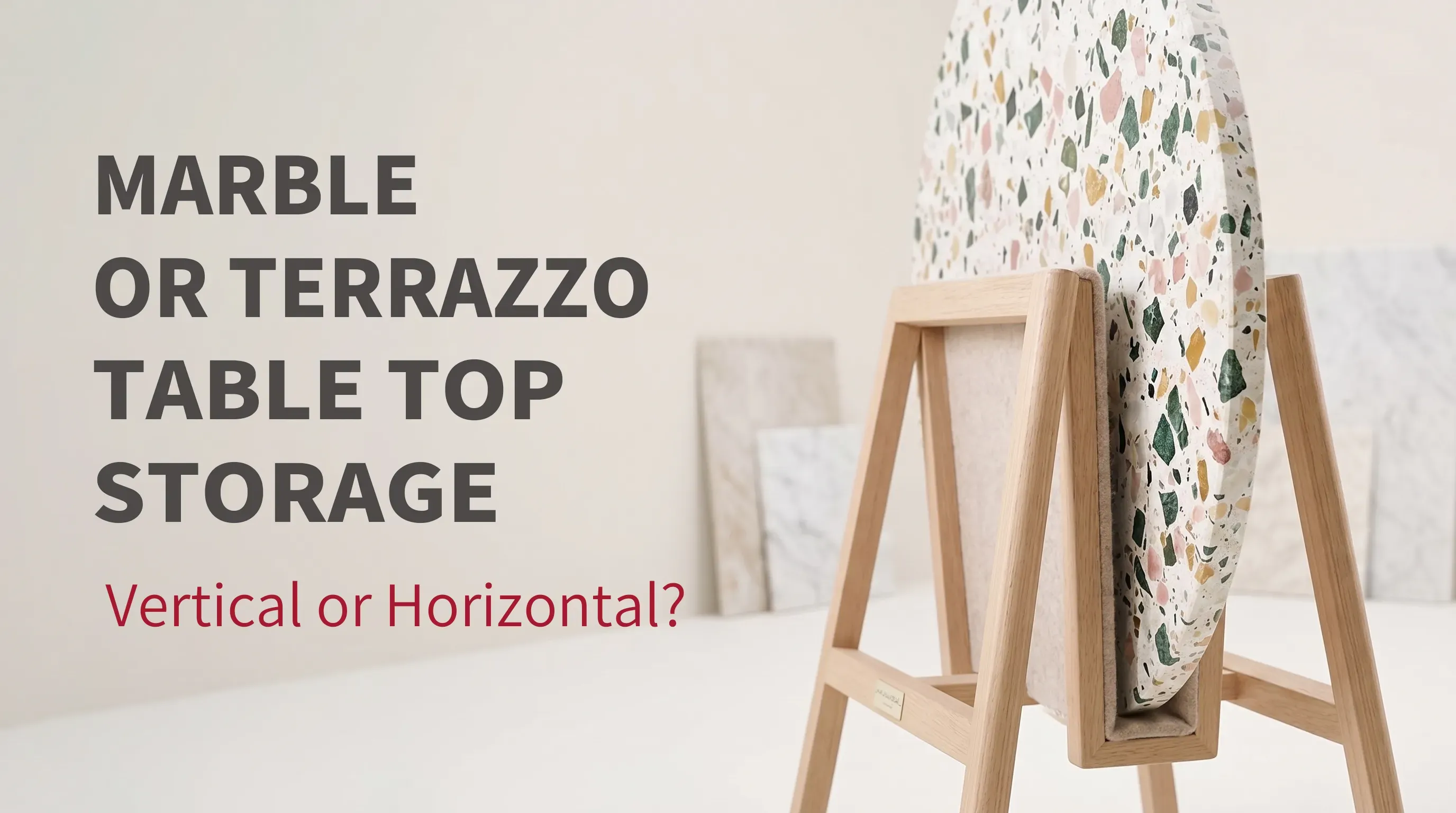
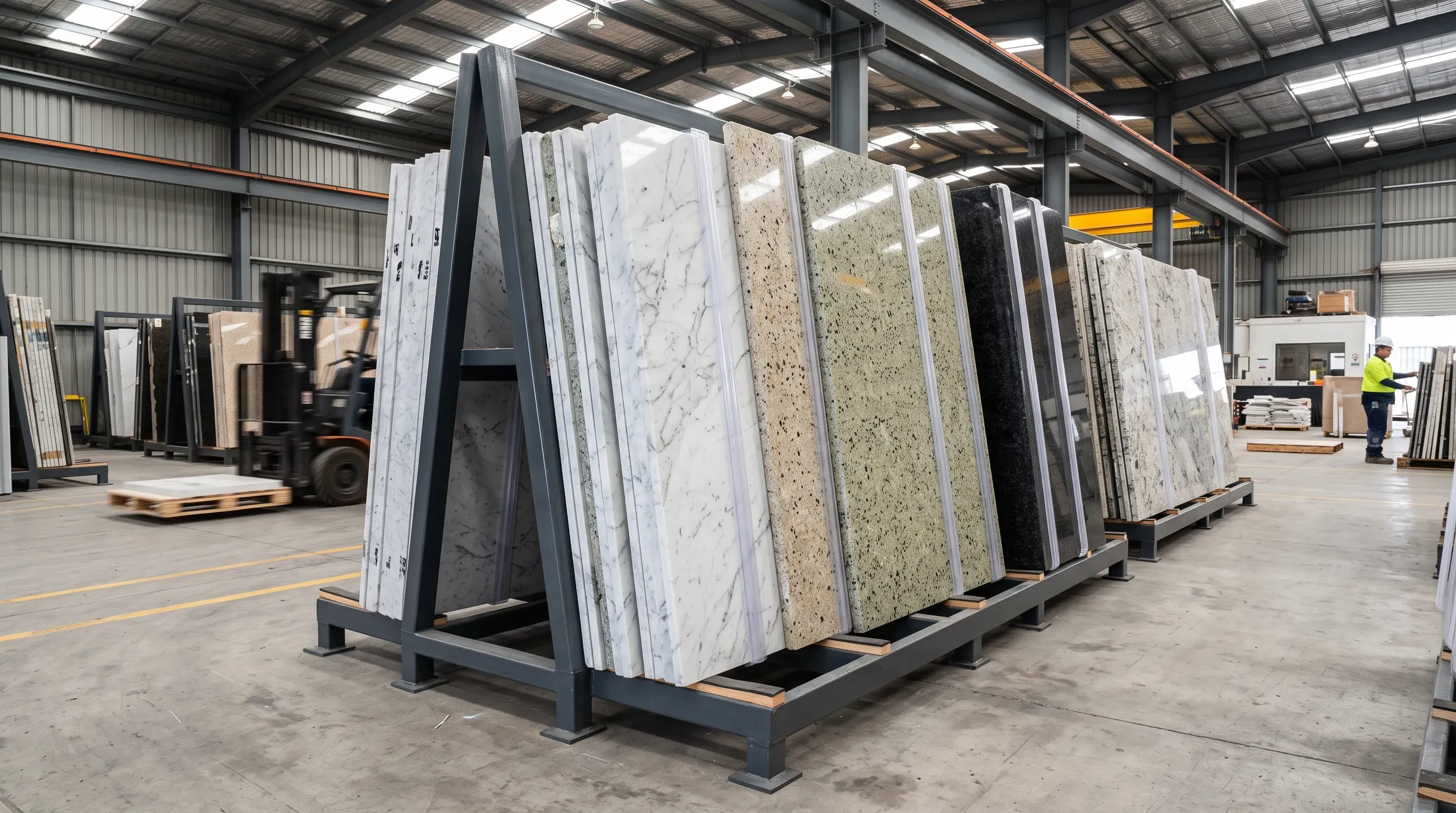
For decorative marble and terrazzo slabs and tabletops, the stone industry universally recommends vertical (upright) storage. This method is prescribed in multiple international material handling standards and is the default practice in professional stone warehouses.
How to Store Vertically — Correctly
Getting vertical storage right requires more than leaning a slab against a wall. Follow these essential guidelines:
| Parameter | Recommendation |
|---|---|
| Tilt angle | No more than 15° from vertical. Over-tilting increases stress on the bottom edge. |
| Support structure | Use sturdy A-frames, steel racks, or purpose-built wooden cradles. Never rely on walls alone. |
| Height limit | Stack height should not exceed 1.6 metres (approx. 5.2 feet) per pallet or rack bay. |
| Face orientation | Store with polished faces together to prevent surface scratches from friction. |
| Cushioning | Place non-staining elastic spacers (rubber pads, cork strips, or clean timber battens) between each unit and at the base. |
| Environmental control | Keep indoors, away from direct sunlight, rain, and extreme temperature swings. |
Why This Works
When stored upright with proper support, the tabletop's own weight runs parallel to its length. The bending moment is near zero. This eliminates the primary cause of stress fractures in brittle stone materials.
Pro tip for commercial buyers: If you're receiving bulk orders for multiple café tables, request that your supplier ships and delivers in vertical racks. Many premium stone fabricators offer reusable steel stillages specifically for this purpose.
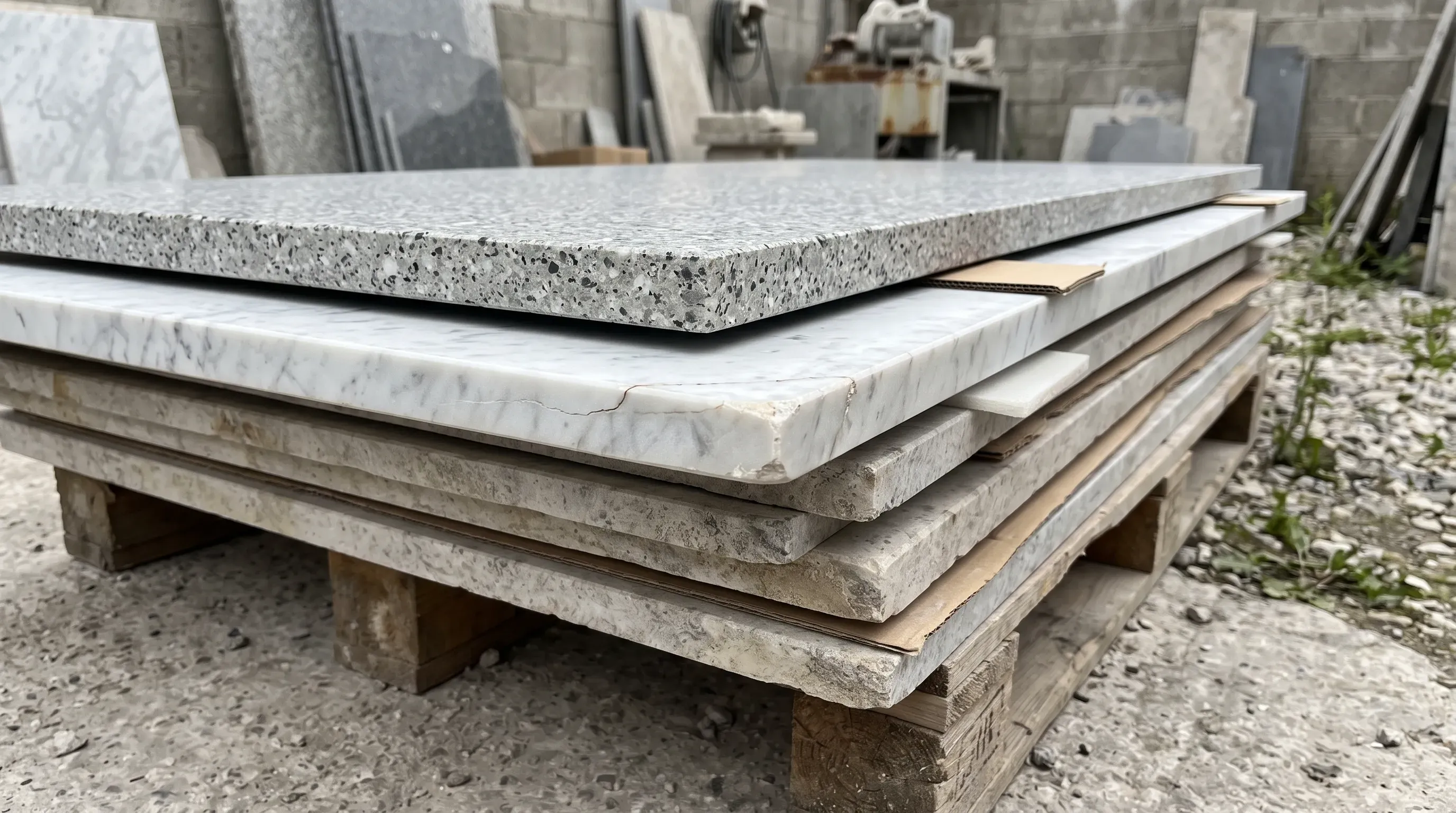
Horizontal Storage: When It's Acceptable — and When It's Not
Horizontal (flat) storage is not the preferred method for decorative stone tabletops. However, we recognise that real-world job sites and showrooms don't always have vertical racks available.
Permissible Use Cases for Horizontal Storage
- Short-term on-site staging: The tabletops arrive and will be installed within 48 hours.
- Small-unit quantities: You're storing just one or two tabletops, not a full pallet.
- Oversized formats: Exceptionally large round or irregularly shaped tops that cannot safely fit into vertical racks.
Non-Negotiable Rules for Horizontal Storage
If you must store flat, these rules are mandatory to avoid damage:
- Perfectly level surface: Place tabletops on a flat, rigid, and level floor or platform. Uneven subfloors create point loads that can initiate cracks.
- Do not stack heavy loads on top: If stacking multiple tops is unavoidable, limit total stack height to under 1.4 metres. Install clean, soft timber battens between each top, aligned vertically to transfer load evenly.
- Never walk on them: This sounds obvious, but it happens. Treat each surface as finished.
- Protect from UV and moisture: Sunlight can fade certain marbles. Moisture can seep into terrazzo's cementitious binder, causing efflorescence or discolouration.
The Hidden Risk of Horizontal Stacking
In horizontal stacks, the bottom tabletop bears the full weight of everything above it. Over time, even if the stone doesn't crack visibly, internal micro-fractures can develop. These may not show until the table is in use—when thermal expansion from a hot coffee cup or minor settlement triggers a complete break.
For high-traffic commercial venues like busy cafés, that's a liability no one wants.
Quick Reference: Vertical vs. Horizontal at a Glance
| Criterion | Vertical Storage | Horizontal Storage |
|---|---|---|
| Industry recommendation | ✅ Strongly recommended | ⚠️ Temporary use only |
| Risk of breakage | Low (when properly racked) | Moderate to high (if stacked) |
| Space efficiency | High (uses floor footprint efficiently) | Low (requires large floor area) |
| Ideal for | Warehouses, long-term storage, bulk orders | On-site staging, oversized tops, short holds |
| Key requirement | A-frames + spacers + ≤15° tilt | Level floor + no heavy stacking |
Practical Recommendations for Designers, Retailers, and Commercial Buyers
For Designers
Specify storage and handling requirements in your FF&E (Furniture, Fixtures & Equipment) documentation. Include a note that tabletops must be delivered upright in dedicated racks. This sets clear expectations with your procurement team and installer—and protects your design vision.
For Retailers
If you hold stock for local restaurants and coffee shops, invest in simple A-frame storage racks. They cost little, save you thousands in replacement costs, and demonstrate your commitment to quality when clients visit your warehouse.
For Commercial End-Users (Cafés, Restaurants, Hotels)
When you receive your order, inspect each tabletop before signing the delivery note. Look for hairline cracks, especially along edges. If the shipment arrived flat-stacked, pay extra attention—and if you spot damage, document it immediately.
Final Verdict: Vertical Wins — But Horizontal Has Its Place
| Scenario | Recommended Orientation |
|---|---|
| Long-term warehousing | ✅ Vertical |
| Bulk order storage | ✅ Vertical |
| Transit / shipping | ✅ Vertical (in stillages or crates) |
| On-site holding (<48 hours) | Horizontal (if following all safety rules) |
| Single piece in a design showroom | Horizontal (on a padded, level display plinth) |
The bottom line: For professional stone tabletop storage, vertical is the gold standard. Horizontal is a temporary workaround—not a strategy.
By adopting vertical storage as your default, you:
- Reduce product damage by over 80% (based on industry claims data)
- Extend the service life of your tabletops
- Build a reputation for reliability with your commercial clients
Need More Guidance?
Every project is unique. If you're handling a large-volume order for a hospitality chain or a custom-shaped terrazzo top for a flagship café, reach out to our technical team. We provide:
- Custom storage racking layouts for your warehouse or showroom
- On-site handling training for installation crews
- Tailored packaging solutions for fragile or oversized tabletop designs
Protect your surfaces. Protect your reputation. Choose the right storage from day one.
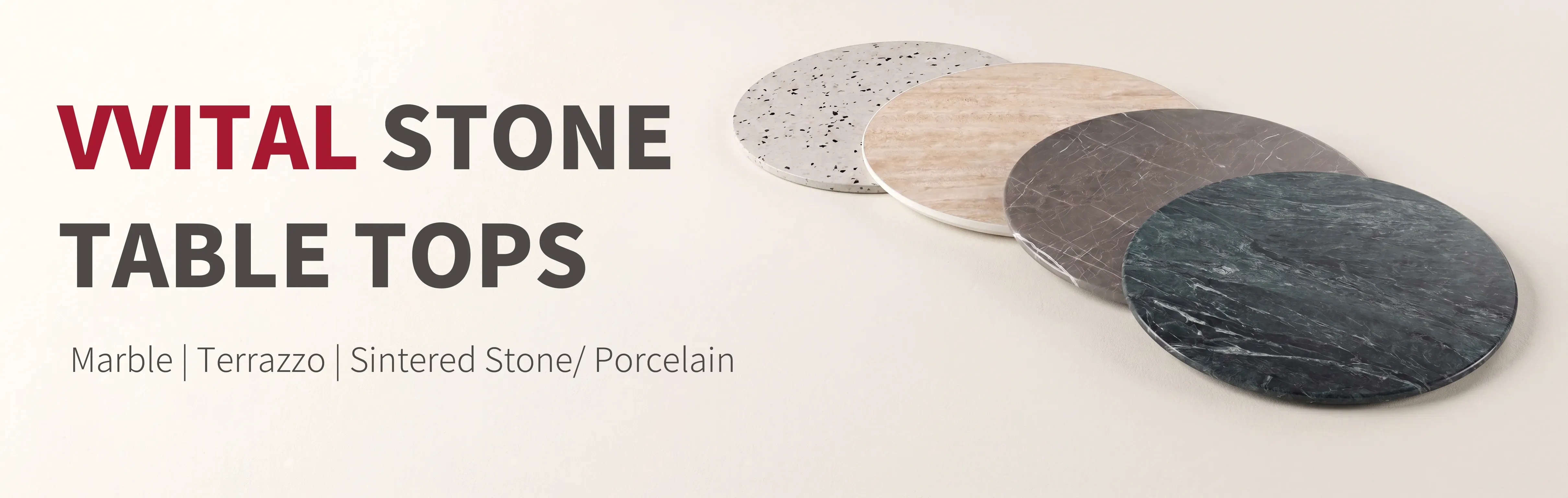
Ready to specify or order? Explore the full collection of VVITAL marble, ceramic, and terrazzo table tops — crafted for commercial durability and design excellence.
👉 View VVITAL Stone Table Tops
For wholesale inquiries, custom projects, or technical support, contact our team directly: