How to Clean and Maintain Granite Tabletops Durable but Demanding
Granite is one of the hardest natural stones, but it still requires proper care. Discover our factory-approved methods to keep your granite countertop stain-free and glossy.
How to Clean and Maintain Granite Tabletops: Durable but Demanding
Introduction
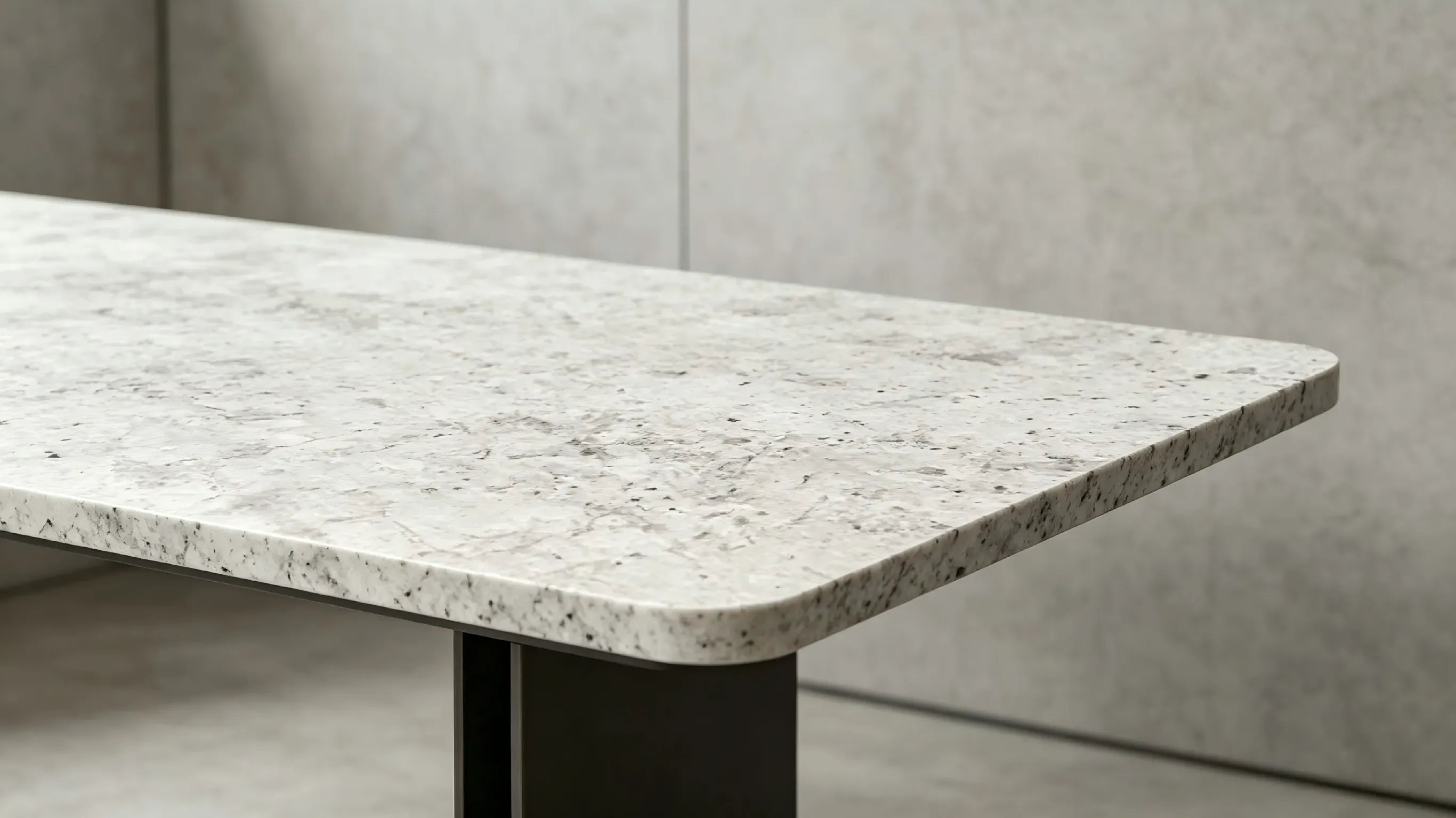
Granite is an igneous rock composed mainly of quartz and feldspar. It is incredibly hard and resistant to scratches and heat—making it a top choice for busy kitchens. However, "hard" does not mean "invincible." Granite is still porous, meaning it has microscopic capillaries that can absorb liquids and oils, leading to dark, stubborn stains if neglected.
At VVITAL – a dedicated table top factory, supplier, and manufacturer – we source and fabricate premium granites. Here is our blueprint for keeping that natural crystalline shine intact.
We also offer a full collection of granite tabletops in various colors and thicknesses. Whether you need a durable kitchen island top or an elegant outdoor dining table, we have the solutions. You are very welcome to inquire and order from us directly – we ship globally with factory-direct pricing.
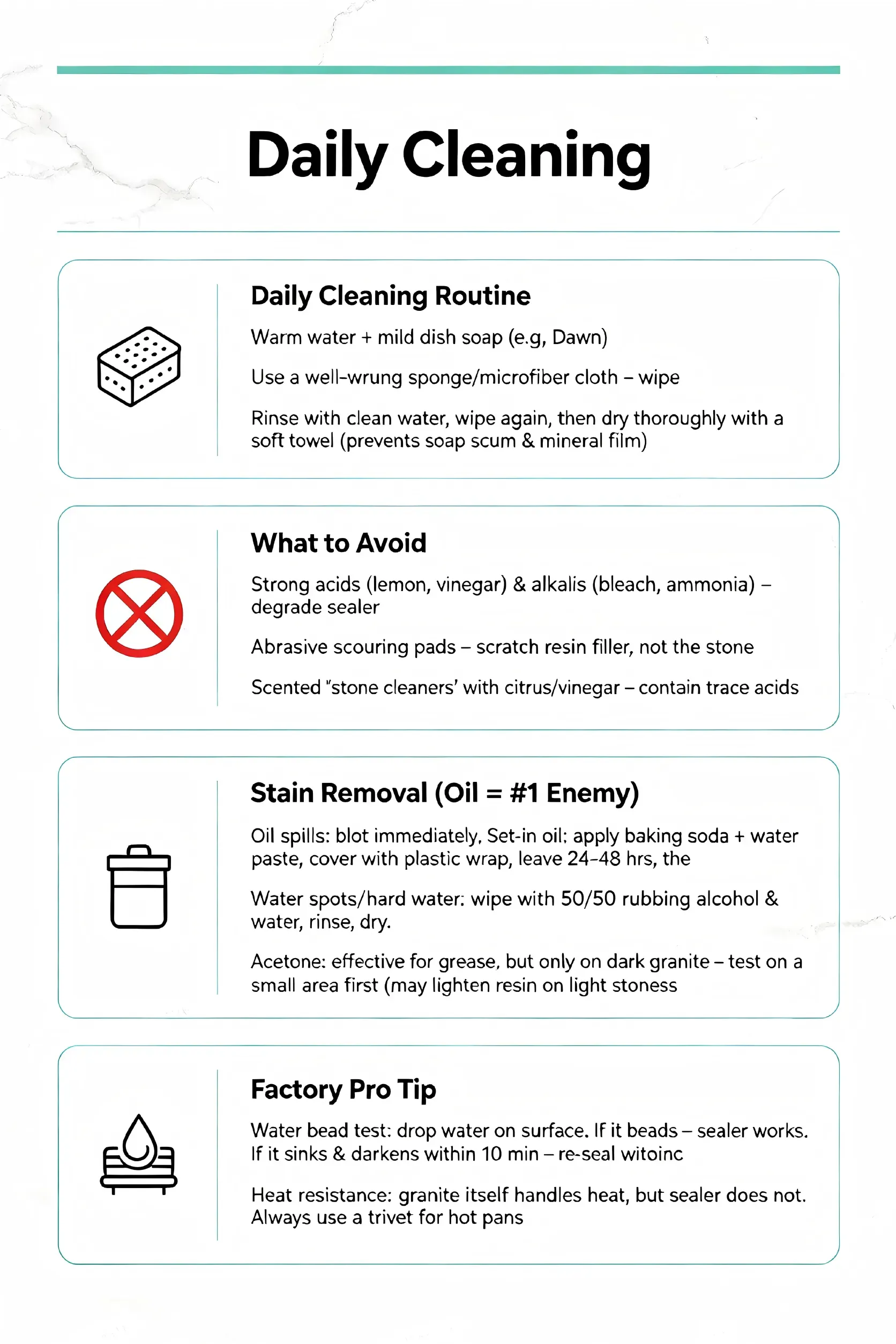
1. Daily Cleaning Routine
- Warm Water & Soap: This is really all you need. Mix warm water with a small amount of mild dish soap (like Dawn).
- Wring Well: Use a sponge or microfiber cloth that is well-wrung out. Wipe the surface.
- Rinse & Dry: Rinse the cloth with clean water, wipe again to remove soap residue, and dry thoroughly with a clean soft towel. While granite is hard, soap scum and minerals in water can leave a film if not dried.
2. What to AVOID
- ❌ Highly Acidic or Alkaline Cleaners: While granite is less reactive than marble, strong acids (like lemon juice or vinegar) can degrade the resin-based sealers we use. Alkaline cleaners (like bleach or ammonia) can break down the chemical bond of the sealer over time.
- ❌ Abrasive Scouring Pads: Although granite won't scratch easily, the resin filler used to seal the natural fissures in the stone can be scratched. Always use soft cloths.
- ❌ Generic "Stone Cleaners": Avoid any cleaners that contain lemon or vinegar scents, as they often contain trace acids.
3. Stain Removal (Oil is the #1 Enemy)
Because granite is dense, most stains sit on the surface or just below it.
- Oil Stains (The Most Common): If oil is spilled, blot immediately. For a set-in oil stain, create a poultice using a mixture of baking soda and water (or a commercial poultice) and spread it over the stain, covering it with plastic wrap. Leave for 24-48 hours. The poultice will draw the oil out. Remove and rinse. Factory Tip: Acetone is a great solvent for cutting grease, but use it sparingly and only on dark granites, as it may lighten the resin in light-colored stones. Test first!
- Water Spots / Hard Water: These are mineral deposits. Wipe with a 50/50 solution of water and rubbing alcohol. Rinse and dry.
4. Pro-Tip from Our Factory Floor
- The "Water Bead" Test: To check if your granite needs re-sealing, perform our factory test: place a few drops of water on the surface. If the water beads up, the sealer is working. If the water sinks in and darkens the stone within 10 minutes, it is time to re-apply a granite impregnating sealer.
- Heat Resistance, but... We often tell our clients: "Granite can handle the heat, but your sealer cannot." While the stone itself won't crack under a hot pan, extreme heat can break down the sealant. Always use a trivet.
5. Summary Checklist
- ✅ Clean with warm water and mild soap daily.
- ✅ Blot spills immediately to prevent oil penetration.
- ✅ Perform the "water bead" test every 6 months.
- ❌ Avoid abrasive pads and strong chemicals.
- 🔄 Re-seal immediately if the water sinks in.
And if you are considering a new granite tabletop, remember that VVITAL is a professional table top factory, supplier, and manufacturer. We produce high-quality granite surfaces for both residential and commercial projects.
We invite you to ask our sales team for a catalog, a sample, or a custom quote. We’re here to help you choose the best granite for your needs.
Just a friendly reminder that the UV sealed stone tops are recommended for indoor use only.
The sealing is a resin coating on the surface. While it helps with stain resistance, prolonged exposure to sunlight may cause yellowing over time. This is especially noticeable on light-colored stone surfaces.