The Truth About Ceramic Table Tops Thickness, Strength, and Cost Explained
Drop test proves 6mm fiberglass-reinforced ceramic outperforms 11mm solid. Compare price, thickness, and durability for your project.
Understanding Ceramic Table Top Constructions
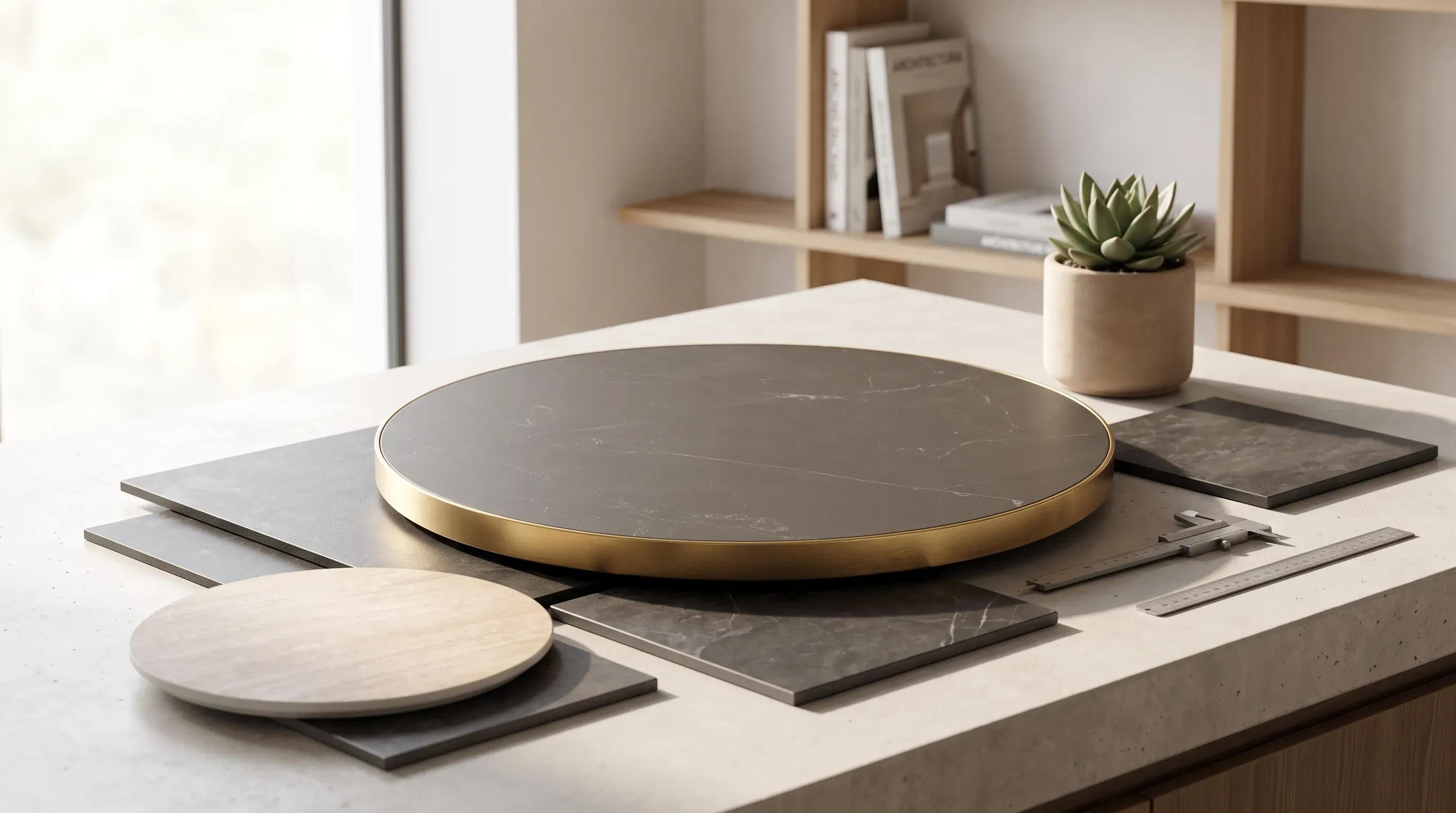
Ceramic and sintered stone table tops come in various constructions, each offering a unique balance of price, thickness, and durability. In this guide, we compare three common options: 11mm solid ceramic, 30mm (11mm ceramic + 18mm MDF), and 6mm (5mm ceramic + 1mm fiberglass). To demonstrate real-world performance, we conducted a drop test with a steel ball dropped from height onto both the 11mm and 6mm tops. The results may surprise you.
Quick Comparison – Which Construction Fits Your Needs?
| Construction | Thickness | Cost Level | Drop Test Result | Best Use Case |
|---|---|---|---|---|
| 11mm solid ceramic | 11mm | Lowest | Shattered on impact | Budget-friendly, residential |
| 30mm (11mm + 18mm MDF) | 30mm | Medium | Not tested – MDF absorbs shock | High-end commercial, heavy use |
| 6mm (5mm + 1mm fiberglass) | 6mm | Highest | Survived intact | Lightweight, premium design |
Price – What Are You Really Paying For?
The cost of a ceramic table top is not solely determined by thickness. The thinnest option – 6mm with fiberglass backing – is often the most expensive due to its complex lamination process and specialized production. The 11mm solid ceramic is the most budget-friendly, while the 30mm composite falls in the middle range. However, as the drop test reveals, the 6mm option offers superior impact resistance that justifies its higher price for many applications.
Thickness – More Than Just a Number
Thickness affects both aesthetics and functionality. The 11mm top offers a sleek, modern look suitable for residential use. The 30mm top, with its substantial MDF core, exudes a premium, robust feel ideal for high-end commercial environments. The ultra-thin 6mm top delivers a contemporary minimalist appearance, perfect for lightweight and design-led projects. But as the video demonstrates, thinner does not automatically mean weaker.
Drop Test – 11mm Ceramic vs 6mm Fiberglass-Reinforced Ceramic
A steel ball was dropped from the same height onto two different ceramic tops. The results were clear: the 11mm solid ceramic shattered completely upon impact, while the 6mm ceramic with 1mm fiberglass backing survived intact with no visible damage. This test proves that fiberglass reinforcement provides exceptional impact resistance, even in a much thinner profile.
Making the Right Choice
If budget is your priority, the 11mm solid ceramic is a straightforward, cost-effective solution. If you need maximum durability and a premium feel, the 30mm composite is a solid choice. But if you value lightweight design combined with superior impact resistance, the 6mm fiberglass-reinforced option is the clear winner – as proven by the drop test. Consider your project's specific needs, and remember: the most expensive option may sometimes be the smartest investment.
Need Expert Advice?
For expert advice on selecting the ideal ceramic table top for your project – or to request your own drop test sample – please contact us. Our team is ready to assist you with any questions. Email us at VIP@vvitablebases.com.