How to Clean and Maintain Marble Tabletops: A Factory Expert’s Guide
Marble is elegant but delicate. Learn the proper daily cleaning routines, acid-avoidance tips, and stain-removal techniques straight from our factory specialists.
How to Clean and Maintain Marble Tabletops: A Factory Expert's Guide
Introduction
Marble is a metamorphic rock formed primarily from calcium carbonate. This composition is precisely what makes it so visually stunning—offering beautiful veining and a cool, luxurious sheen. However, it is also what makes it chemically reactive. As a manufacturer – VVITAL, a professional table top factory, supplier, and manufacturer – we often see beautiful marble tabletops ruined within months simply because the wrong cleaner was used.
Understanding that marble is "soft" and "reactive" is the first step to proper maintenance.
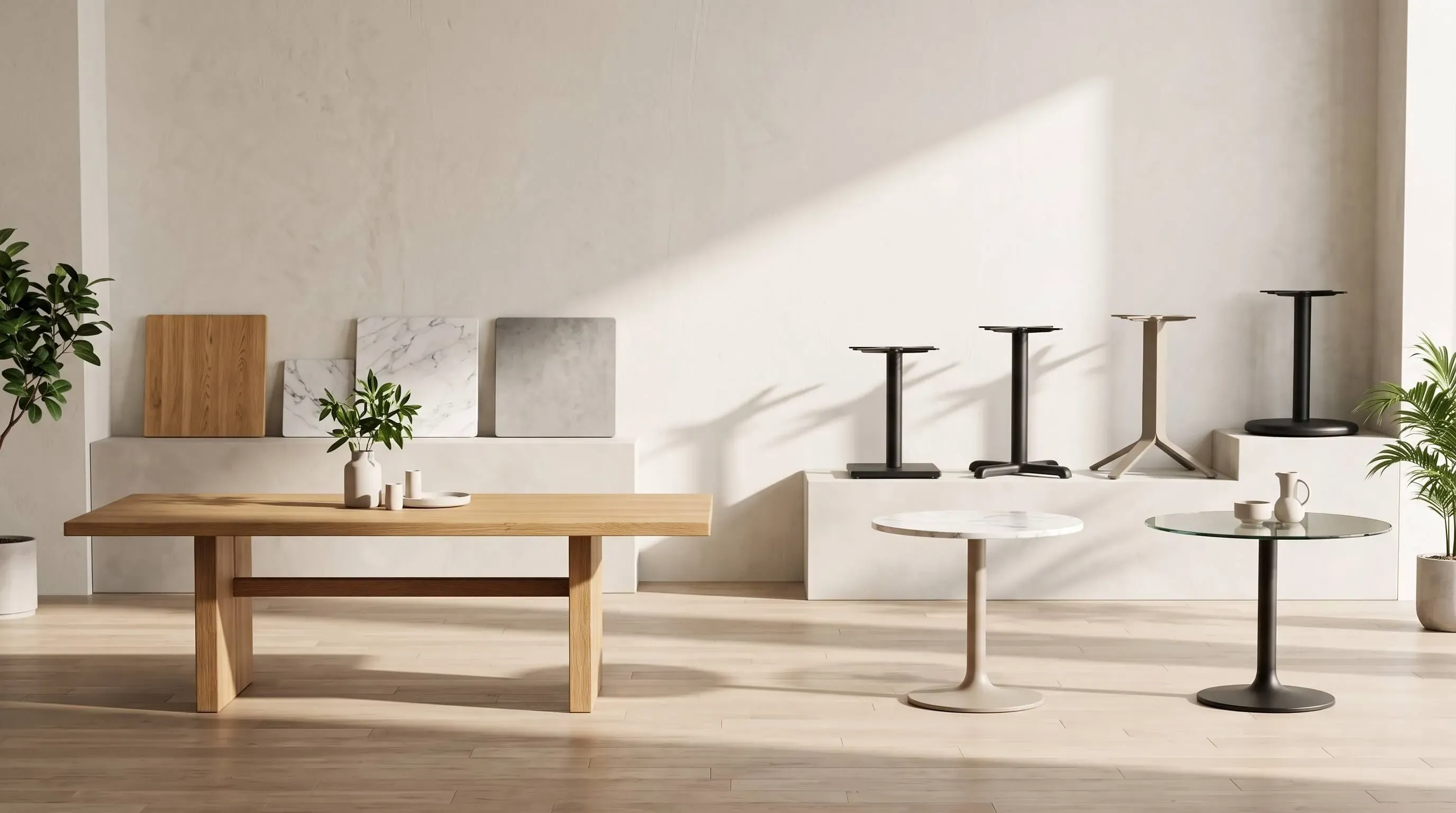
By the way, we produce and supply a wide range of marble tabletops – from classic white Carrara to bold dark Nero Marquina. If you are interested in purchasing a marble table for your dining room, office, or hotel lobby, you are warmly welcome to contact us for product catalogs and price lists.
1. Daily Cleaning Routine
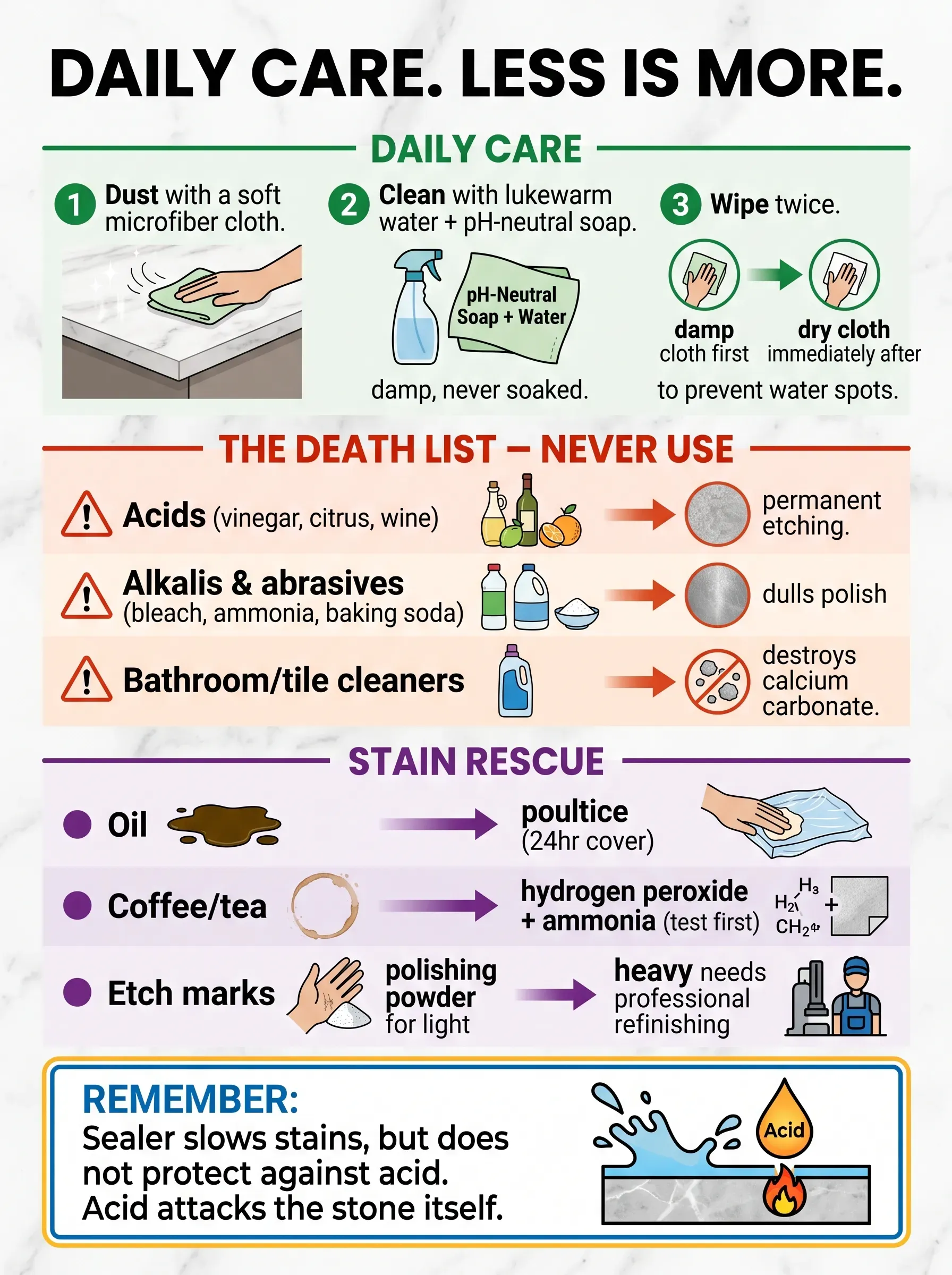
- Less is More with Water: Dust the surface with a soft, dry microfiber cloth to remove abrasive particles. For deeper cleaning, dampen (do not soak) a cloth with lukewarm water and a few drops of pH-neutral dish soap or a specialized marble cleaner.
- Double-Wipe Method: Wipe the surface with the damp cloth, then immediately follow up with a clean, dry, soft cloth to buff the surface dry. This prevents water spots from forming on the calcite crystals.
2. What to AVOID at All Costs (The "Death List")
This section is critical for our customers. Please memorize these "Do Nots":
- ❌ Acids: Vinegar, lemon juice, orange juice, wine, and tomatoes will chemically etch (dull) the surface, leaving permanent rings.
- ❌ Alkalis & Abrasives: Bleach, ammonia, baking soda (sodium bicarbonate), and general-purpose kitchen cleaners with citrus extracts will degrade the polish.
- ❌ Bathroom Cleaners: Never use tub-and-tile cleaners on marble; they contain acids meant for porcelain that will destroy the calcium carbonate.
3. Stain Removal (Factory Techniques)
If an accident occurs, act fast:
- Oil-based Stains (Food, Cooking Oil): Wipe immediately with a soft cloth. For stubborn marks, use a marble poultice (a paste of baking soda and water—note: use this only briefly, as baking soda is mild abrasive) or a commercial marble stain remover. Apply the paste, cover with plastic wrap, let it sit for 24 hours, then rinse and buff. Factory Tip: For oil, we actually prefer using a specialized solvent-based poultice over DIY pastes.
- Organic Stains (Coffee, Tea, Wine): These often sit on the surface. Use a few drops of 12% hydrogen peroxide mixed with a few drops of ammonia to blot the stain (test in an inconspicuous area first).
- Etch Marks (Dull Spots): If the acid has already dulled the surface, light etch marks can be removed with a marble polishing powder. Heavy etching requires professional re-grinding and honing.
4. Pro-Tip from Our Factory Floor
- Sealing is Essential, but not a Shield: We apply a high-quality impregnating sealer to our marble tabletops before they leave our facility. This sealer penetrates the pores and slows down stain absorption. However, it does not protect against acid etching. Acid attacks the crystal structure itself, not just the surface pores.
- To restore high-gloss shine after cleaning, we recommend using a stone-specific spray polish designed for calcium-based stones.
5. Summary Checklist
- ✅ Clean spills immediately.
- ✅ Use pH-neutral cleaner & soft cloth.
- ✅ Use coasters for ALL drinks.
- ❌ Never use vinegar, lemon, or bleach.
- 🔄 Re-seal professionally every 1-2 years depending on usage.
And if you are in the market for a new marble table, remember that VVITAL is a premier table top factory, supplier, and manufacturer – we offer bespoke sizes, edge treatments, and finishes.
Just a friendly reminder that the UV sealed stone tops are recommended for indoor use only.
The sealing is a resin coating on the surface. While it helps with stain resistance, prolonged exposure to sunlight may cause yellowing over time. This is especially noticeable on light-colored stone surfaces.