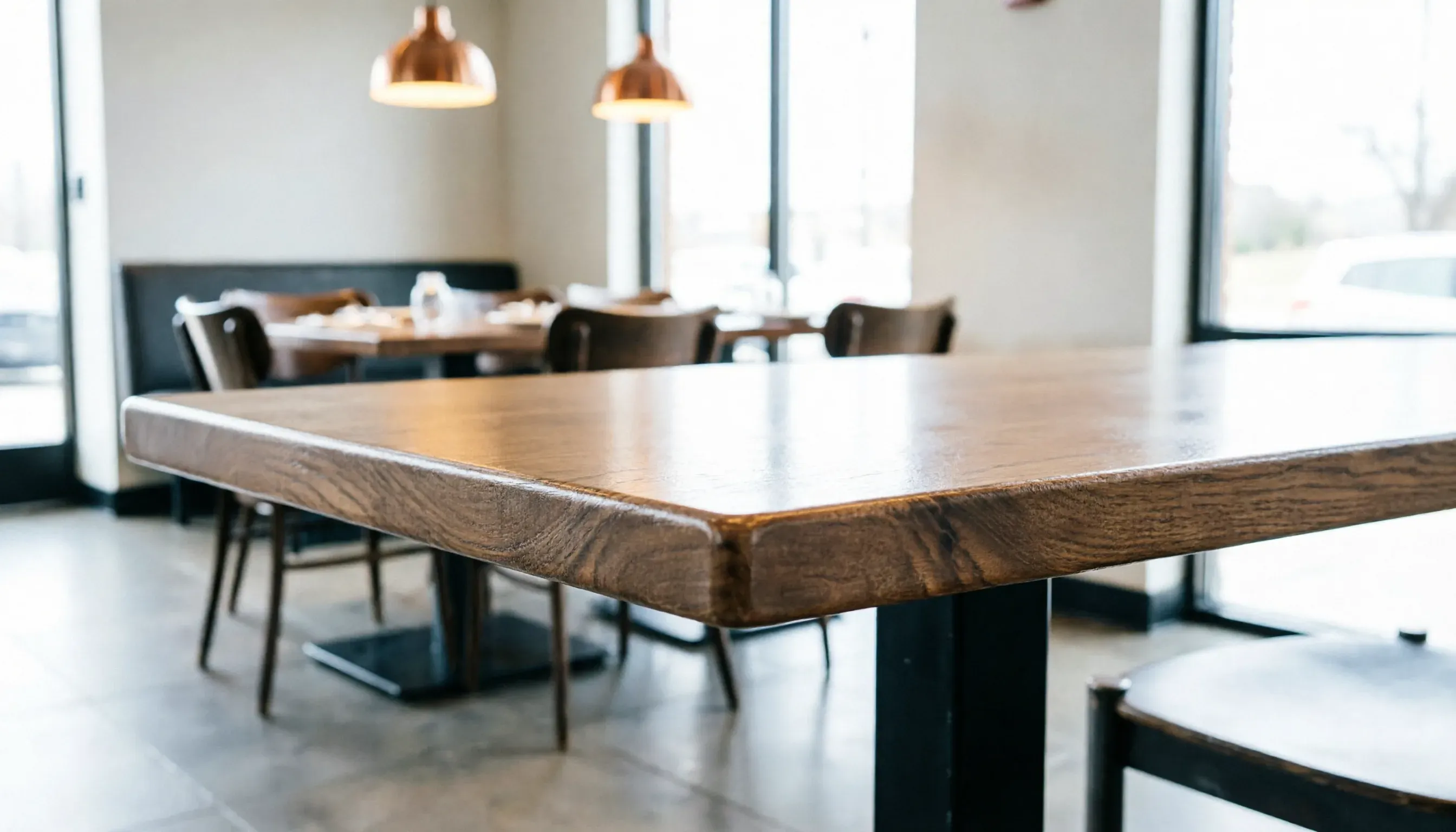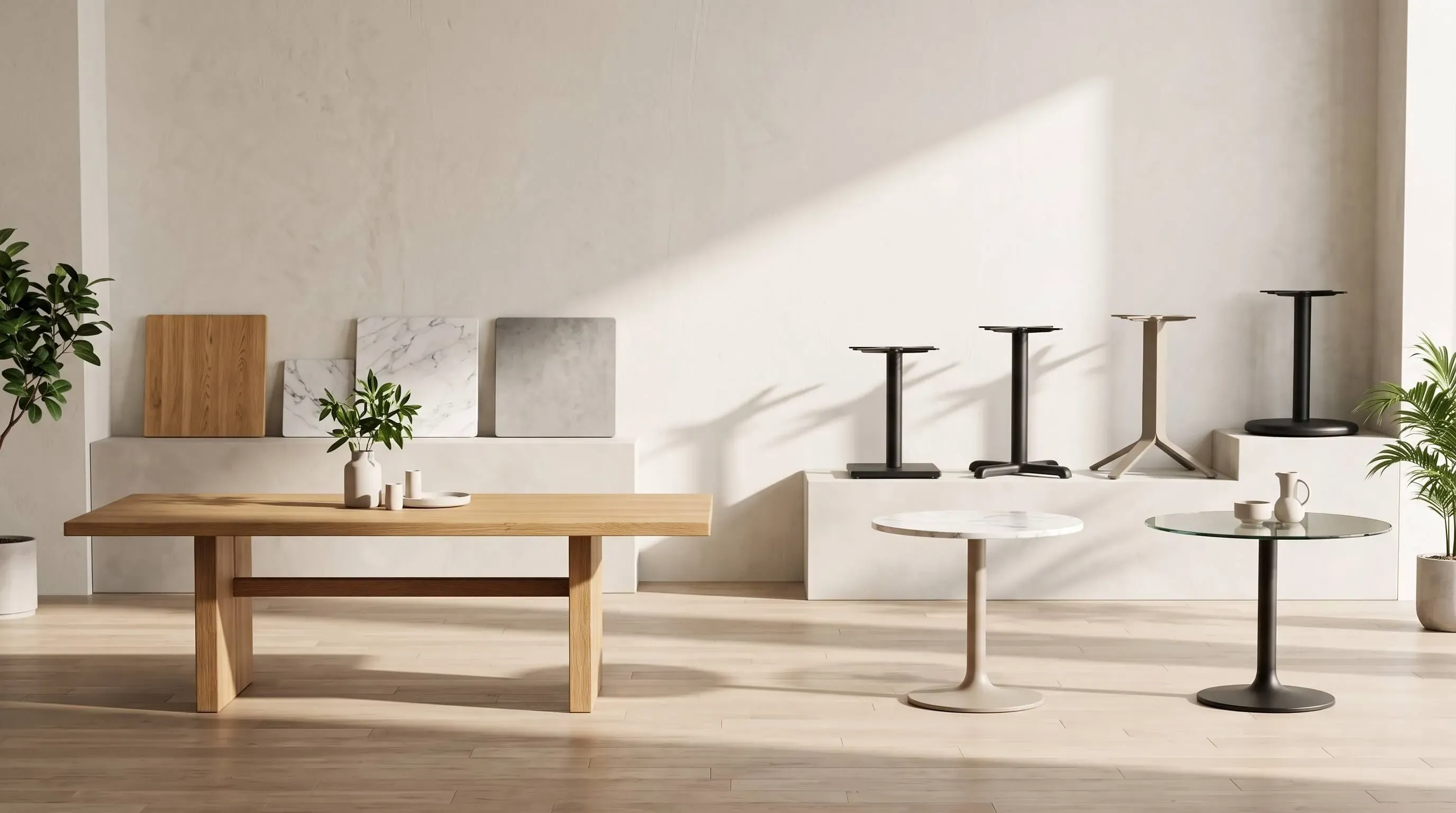
Table Base vs. Table Top: Which Matters More for Stability and Style?
Learn how table base and tabletop work together for stability and style. Compare HPL, marble, solid wood, and more. Expert guide from a trusted table base & top supplier.
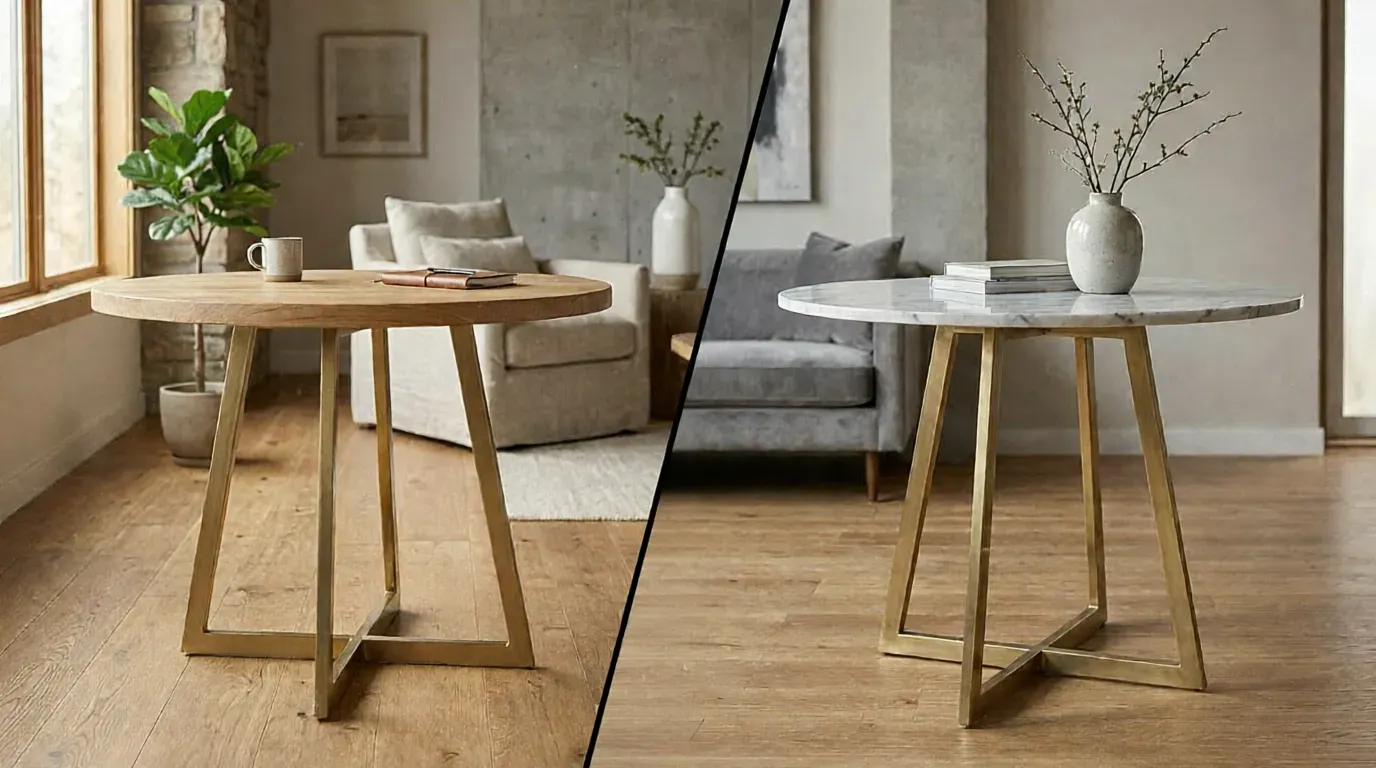
Table Base vs. Table Top: Which Matters More for Stability and Style?
When designing or buying a table, two components always compete for attention: the base and the top. The tabletop defines the surface, look, and daily user experience; the base determines how steady, durable, and comfortable the table feels. Get the balance wrong, and you’ll have a wobbly heavy top or an oversized base that overwhelms the room. So which element is more critical? The truth is, they are a system—and the best choice depends on your top’s material and thickness.
Stability: The Base Anchors, the Top Dictates the Load
The table base is the structural anchor. Its type—four‑leg, pedestal, trestle, or X‑frame—directly affects stability. Four legs offer predictable support on uneven floors; pedestals save legroom but need a wide, heavy footing. A critical rule for commercial tables: the base spread (the distance between outermost support points) should cover at least 60–65% of the tabletop’s width for standard materials. For round tops, the base diameter should be at least half the top’s diameter.
The base material also matters. Cast iron provides excellent vibration damping and a low centre of gravity, ideal for heavy tops. Steel and aluminium offer design flexibility and lighter weight, suitable for slim, modern profiles.
The tabletop influences stability through its weight and rigidity—not just thickness, but density. Different materials come in standard thicknesses, each with unique structural behaviour:
| Material | Typical Thickness | Approx. Weight (kg/m²) | Key Stability Notes |
|---|---|---|---|
| Pure HPL (Compact Laminate) | 11–12 mm | ~17.5 | Self‑supporting; allows overhangs up to 150 mm; standard base spread (60–65%) works well. |
| Sintered Stone / Porcelain | 11 mm | ~28–30 | Dense but brittle; requires full, flat underside support; base spread should be 65–70% to avoid cracking. |
| Marble / Granite | 18 mm | ~45–50 | Very heavy; needs a wide, heavy base (spread ≥70%) and continuous support to prevent stress fractures. |
| MDF Core | 25 mm | ~16–20 | Moderate weight but prone to sagging over long spans; use metal stiffeners for spans >1200 mm. |
| Framed Composite (metal/wood frame + infill) | 30 mm overall | 20–40 (varies with infill) | Frame provides rigidity; base spread follows the infill’s weight category (heavier infill = wider base). |
| Solid Wood (hardwood) | 30–40 mm | ~25–30 | Naturally rigid and durable; base spread 60–65% is typical, but allow for wood expansion in attachments. |
Key takeaway: Heavier tops (marble, thick wood) demand wider, heavier bases. Lighter tops (HPL, MDF) allow for slimmer, more sculptural base designs without sacrificing stability—provided the base is properly engineered.
Style: Visual Harmony Between Thickness and Design
The base sets the design language. Pedestal bases feel light and contemporary, ideal for open spaces. Four‑leg bases convey tradition and solidity, anchoring formal dining rooms. Trestle and X‑frames add industrial or rustic character. The base’s material—cast iron for vintage charm, steel for sleek minimalism, wood for warmth—further defines the aesthetic.
The tabletop delivers the primary visual impact. Its material (wood grain, stone veining, solid colours) and thickness are deliberate style cues. Here’s how standard thicknesses communicate different moods:
11–12 mm (HPL & sintered stone): Ultra‑slim, modern, and minimalist. These thin profiles create a “floating” effect, especially with slender pedestals or hairpin legs. Perfect for contemporary cafes, coworking spaces, and outdoor terraces.
18 mm (marble): Classic luxury. The moderate thickness suggests refinement without bulk, but the visual weight of the stone demands a substantial base—a thick column or heavy squared legs—to maintain proportion.
25 mm (MDF): A versatile mid‑weight option. It works with modest four‑leg or trestle designs, often used in cost‑conscious commercial settings like schools and office workstations.
30 mm (framed composite): Architectural and tailored. The visible frame (metal or wood border) adds a bespoke, industrial feel. This thickness pairs well with robust trestles or wide steel frames that echo the frame’s strength.
30–40 mm (solid wood): Bold, organic, and enduring. The heft conveys quality and tradition. To avoid a “toothpick” effect, pair it with thick legs or a heavy trestle that visually matches the slab’s mass.
Edge profiles also depend on thickness: thick wood allows for bullnoses and bevels; thin HPL and stone suit clean, square edges that highlight their slimness.
The Right Balance: A Practical Selection Guide
Choosing the correct base for your top is about matching physical weight with visual weight. Use this quick reference for common configurations:
| Top Type | Thickness | Recommended Base Spread | Best Base Style |
|---|---|---|---|
| Pure HPL | 11–12 mm | 60–65% | Slim pedestal, cantilever, or hairpin legs |
| Sintered stone | 11 mm | 65–70% | Flat‑support frame + medium pedestal |
| Marble / granite | 18 mm | ≥70% | Heavy cast‑iron pedestal or wide four‑leg |
| MDF core | 25 mm | 60–65% | Four‑leg with metal apron or torsion box |
| Framed composite | 30 mm | Match infill weight | Sturdy trestle or central pedestal |
| Solid wood | 30–40 mm | 60–65% | Thick four‑leg or wide trestle (allow for expansion) |
For standard dining height (28–30 inches), the base footprint should cover at least 30–35% of the top’s diameter (round) or its short‑side width (rectangle). For bar‑height tables (40–42 inches), increase the base floor width to at least 0.6 times the total height—lighter tops like HPL and MDF reduce tipping risk significantly.
Final Thoughts
Neither the base nor the top is inherently more important—they are a partnership. The base provides stability, but its required footprint depends entirely on the top’s weight and rigidity. The top delivers style, but its visual impact is only complete when paired with a base that matches its proportions.
Understanding the standard thicknesses—11–12 mm HPL, 11 mm sintered stone, 18 mm marble, 25 mm MDF, 30 mm framed composites, and 30–40 mm solid wood—gives you a clear, engineering‑based framework. Choose the combination that balances function, durability, and aesthetics for your space, whether a home dining room, a busy café, or a corporate boardroom.
VVITAL, a FOSHAN TABLE BASE & TABLE TOP Supplier, offers coordinated base and top solutions across all these specifications—helping you build a table that works as one integrated system.